.jpg%3F2026-07-28T01%3A15%3A50.239Z&w=3840&q=85)
“If you want to change something, you really have to listen”
Young Climate Prize alumnus Carlos Ayvazian is a climate entrepreneur and activist fighting clean energy scarcity and easing the pressure on displaced people in Lebanon. In this conversation with his mentor Scott Massing, he discusses navigating innovation during conflict and his continuing humanitarian efforts.
Working on the front lines of both the climate crisis and the war in Lebanon, Young Climate Prize alumnus Carlos Ayvazian is innovating to provide a wide range of resources to those who have been displaced and deprived of basic necessities. Ayvazian founded Wasted Treasures when he was 22. The project offered a cost-effective, eco-friendly heating solution by transforming organic waste into high-calorie biomass products, addressing Lebanon’s energy and environmental crises simultaneously. During Cycle 02 of the prize, Ayvazian was mentored by Scott Massing, former senior program manager of innovation and strategy within MillerKnoll's Global Innovation group. Recently, they reconnected to talk about what happened #AfterYCP, how the humanitarian crisis in Lebanon has affected his project, and his recent contribution to the initiative Pillows of Hope. During the conversation, Ayvazian explains how he has used media and communication to reach local populations in need of support, and describes how he’s dealing with the realities of living through war. Read below for an edited version of the transcript.

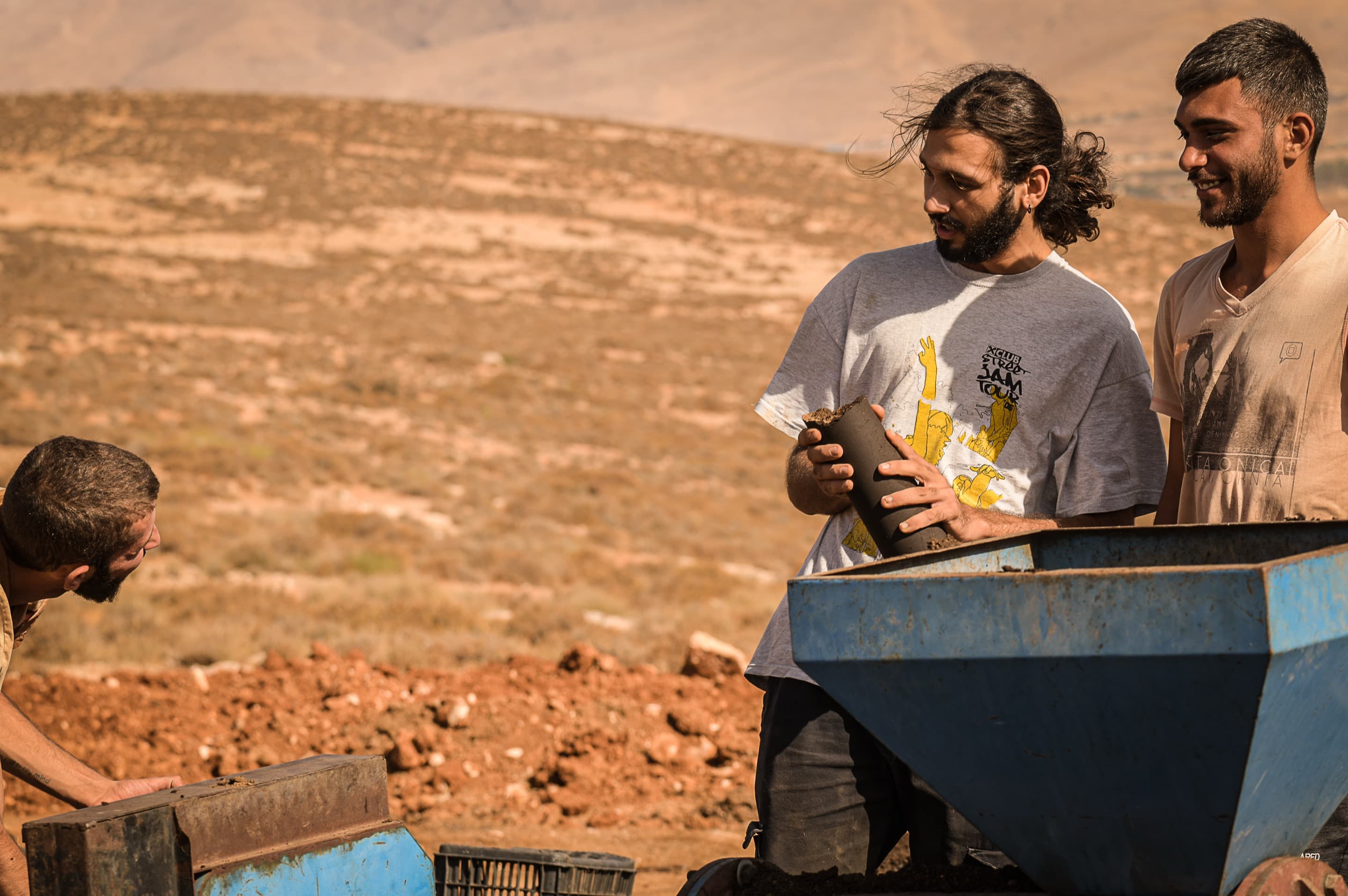
In Ayvazian’s hands are the pellets, converted from various sustainable organic waste such as olive mill residues and forest prunings. Photo Courtesy of Carlos Ayvazian.
Scott Massing: What are you pursuing these days? The last time we spoke you were navigating an uncertainty the war had plunged you into.
Carlos Ayvazian: In Lebanon and regionally, I think it's the same situation today. It’s unprecedented: we're witnessing huge escalations all over the place. I can put the situation in context by saying there's a physical and psychological side to it. The physical is seeing missiles hitting buildings: the destruction. Then you have the psychological effect, which raises the pressure on many different levels. Be it your day-to-day life, your family, your business, your income…
Every time there's a crisis you'll definitely find me volunteering somewhere, trying to do something on the ground, trying to help. I felt this way in 2020 when the Beirut port explosion happened. From protests to movements, I was always on the streets. But this time I feel like I’m coming in with much more experience. A week before everything began, there was an evacuation order and hundreds of thousands of people were leaving their houses at the last minute. At a certain point I got a call from a friend and they told me, "Hey, we're activating the initiative again." This initiative is called Pillows of Hope, and the aim is to distribute pillows for people sleeping on the streets as quickly as possible. Theoretically, we could provide money for housing instead, but this is the most efficient intervention as a couple of individuals who have connections in and out of the country.
SM: That’s interesting. You're trying to bring a benefit to people as quickly as possible and it benefits you as well. It gets your mind off of things because you're busy; you feel good because you're helping other people. How did you pick pillows for the initiative?
CA: The pillows came after my friend Mokhtar [Itani] called me. He decided to use his experience and machinery for the initiative. The production is very low cost; lower than the imported pillows or others that NGOs buy. Also, the decision against merging with big NGOs avoids it becoming complex and disorganized. Since we don't have a centralized system here for emergency response, we went with a small initiative that is mobilized quickly; bigger NGOs take much more time due to their decision-making hierarchies. I think in the short term—say a couple of weeks—it's a great initiative, and hopefully you'll see me volunteering with other ones.
“Every time there's a crisis you'll definitely find me volunteering somewhere, trying to do something on the ground, trying to help.”

Carlos Ayvazian and Scott Massing in discussion. The two reflect on the challenges and opportunities of innovating in Lebanon. Photo courtesy of The World Around.
SM: How are you reaching people who need the pillows?
CA: Currently, displaced people are being distributed into schools. Generally, they are opening their doors in all of the untargeted areas, and we contact them to see what their needs are.
I’ve also reached people through content creation. I started with personal content, then shooting things for my work on Wasted Treasures [Carlos’ Young Climate Prize project in 2024, also based in Lebanon]. But when we launched the initiative, I used these skills to make short content from what I understood about media. Make it short because it's so much more likely to go viral. Try to be as straightforward as possible. Insert your hook at first and put in a call to action. It was then I began to understand that when people saw the videos they might start thinking, “What are the skills that I can mobilize at the moment?”
SM: So how are you keeping the operation running? Earlier, we talked about being an innovation catalyst, and I'd say that sounds like you. You're an on-the-fly entrepreneur.
CA: Thank you for seeing that, I think I can reflect on things as they are. Actually, we were initially limited to around 300 pillows daily. Then we wondered, "What if we tell people to get their sewing machine and help out?”. From then on we started making videos less about funding and more about people; requests to the audience to come with their machines. It's all about open communication. We needed something so we made a video about it. In such times, you have to believe you can get anything done, and you will get your answers while trying.
“I came to a realization that if you want to change something, you really have to listen. I feel like everyone out there can teach us something.”
.png%3F2026-07-28T01%3A19%3A21.476Z&w=3840&q=85)
Carlos Ayvazian uses social media to reach out to local populations directly for the Pillows of Hope initiative. Through his online presence alone, he was able to amass funds, resources and people to give their direct aid. Screenshot of @ayvazoskii on Instagram.
SM: You have this confidence that by approaching things methodically and collaboratively, you’ll see a solution. I think that's important as an innovator. Sometimes you get set in your ways and you forget to let things come to you.
CA: I think it comes from the different failures you take on in the process.
Similarly, asking the right questions took me to new places, like Hasbaya in South Lebanon. There, we worked with a community of Druze people who really knew how to take care of their space and their community. When approaching them my identity and origins didn’t matter. They only cared about common goals, and over time our mission became helping the village with as many resources as possible. More widely, we’re dealing with a broken system, and while there is a central system, it's not efficient. The result being some places end up with more resources than others.
SM: It's fun talking to people who have a beginner's mind. You're not a beginner, but you're good at shedding your biases and listening. Often, if I’m dealing with folks who can't do that I stop trying to teach.
CA: Absolutely. I came to the realization that if you want to change something, you have to listen. I feel like everyone can teach us something. It could be someone in a manual job that you might write off. But if you listen you will always take away something valuable. You won't learn anything new if you don't listen.
SM: It'll be interesting to see what’s next for you, Carlos. I think there's still something to Wasted Treasures. But sometimes you need to put things on the back burner. Take a couple of more weeks - maybe a month or two - to understand how things are functioning regionally. Try to think about what's missing right now and capture that while it's fresh.
CA: The situation is clearly showing us that it [Wasted Treasures] can work. It's worked before, but it also showed us it required time, that we can’t buy because of the general instability in the region. So if we can't do this in Lebanon is it a smart choice to drop it and focus on personal growth and find ways to keep going financially? Otherwise, maybe I should think about staying focused on Wasted Treasures but while keeping a foot outside of Lebanon… I don't think I want to leave it there but I have an urge to find a more stable way. Whether it's financially, mentally or more generally.
SM: Think about how you might leverage the Young Climate Prize. Even though you're not in the cohort right now, you're still connected. People know you and your story. The work doesn't stop. Ideally we can say, “this one scaled. This one did make a difference.” The stories are great, but they are validated when you see what these young climate entrepreneurs are doing. They didn't stop because they made a presentation. They're still working away and they're learning even faster now.
“In such times, you just have to believe that you can get anything done, and then you will get your answers while trying.”
The World Around presents Young Climate Stories
A 4Hawk Production
Made possible by MillerKnoll
Young Climate Stories is an ongoing multimedia series that follows the young people at the forefront of climate action. Each story centers a different participant from the Young Climate Prize, exploring how the next generation is working to build a livable, equitable, and sustainable future. Alongside their mentors, these young innovators bring into focus the urgency of the climate crisis and share how they are using their voices, ideas, and designs to reimagine what's possible for communities and the planet.
Related Insights