Restoration and Renewal in Bukhara
The built fabric of Bukhara has long been the product of far-ranging cultural influences. With a new masterplan for its historic center, Wael Al Awar—founding partner of Dubai- and Tokyo-based firm waiwai—sought to continue that lineage, repositioning the Uzbekistan city as a platform for exchange in the 21st century.
By Wael Al Awar

The heritage district in Bukhara, with the archeological excavation of the sixteenth-century hammam and Subodh Gupta and Baxtiyor Nazirov’s Salt Carried by the Wind in the foreground. Photo: Deed Studio. Courtesy of waiwai.
In 2021, my team at waiwai and I were commissioned by the Uzbekistan Art and Culture Development Foundation to develop a masterplan for the heritage district of Bukhara, a UNESCO World Heritage site. The result was inaugurated with the first edition of the Bukhara Biennial in September 2025.* The project involved working with the buildings themselves, and with ways of inhabiting that have been shaped and refined over many centuries.
Bukhara confronts us with a reality shared by many cities today: it stands at a crossroads between renewal and conservation. On one side, there is pressure to erase crumbling heritage and rebuild. On the other, there is the impulse to preserve, which, when pushed to an extreme, creates a lifeless open-air museum. Uzbekistan has examples of both approaches. Tashkent, the capital, suffered extensive damage during an earthquake in 1966, which led Soviet authorities to demolish the ruins of historical buildings and introduce modernist architecture, turning the city into a showcase for a triumphant image of technological and social progress on collectivist terms. In the 21st century, the pressure of economic progress focuses on tourism, leading to proposals such as “Eternal Bukhara,” a project that aimed to build artificial reconstructions of historical buildings as commercial attractions, alongside hotels, markets, and fountains. The Silk Road entrepôt of Samarkand followed a similar path, where extensive restoration has reshaped the city into glossy, tourist-friendly destination. One of the consequences of this urban scheme has been the displacement of Samarkand’s traditional artisans, with the city’s heritage being reframed as a backdrop for souvenir shops and surface-level restorations. In Bukhara, our work sought an alternative path, one that places the people who inhabit this historically layered city at its center. We premised our approach on a desire to let the past speak for itself, to articulate the city’s 21st century identity as an accumulation of 2,000 years of history. In an era where architects are asked to stamp their identity on everything, our job in Bukhara was to disappear.
Bukhara, a city at the heart of Central Asia, has been built, destroyed, and rebuilt over two millennia. It began as a Sogdian trading town on the Silk Road, connecting China, Persia, and the Mediterranean. The region later came under the Achaemenid Empire, followed by Hellenistic influence after the campaigns of Alexander the Great, and subsequently the Kushan Empire, during which Bukhara became a crossroads of Zoroastrianism, Buddhism, and local faith traditions. After the Kushan Empire declined, Bukhara grew again within the Sogdian trading world, a network of prosperous city-states sustained on Silk Road commerce between China and Persia. The Sogdians, Persian-speaking merchants and diplomats, turned Bukhara into a hub for goods and ideas, maintaining a strong tradition of urban culture and trade.

Map of the Khanates of Bukhara, Khiva, and Khokand and part of Russian Turkistan, based on topographical and astronomical surveys (c. 1875).
In the eighth century, Muslim forces conquered the region, transforming Bukhara into a flourishing center of Islamic culture. Under the Samanids in the ninth and 10th centuries, it reached a golden age of science and literature, a place where Ibn Sina (known in the West as Avicenna) received his early education before going on to produce seminal works that would shape both medicine and philosophy. Then came waves of conquest: the Turkic Karakhanid dynasty, followed by the Mongols, whose invasions caused widespread destruction. Under the Timurids in the 14th and 15th centuries, Bukhara was rebuilt and integrated into a flourishing empire centered on Samarkand.
In the 16th century, Uzbek tribes from the northern steppe took control, founding the Khanate of Bukhara. The city became their political and religious capital and later evolved into an emirate, which became a Russian protectorate in the late 19th century. After the Bolshevik Revolution, the Emirate of Bukhara was abolished, and the city was captured by Red Army forces in 1920, with sustained military action causing significant destruction in the historic center. It was then incorporated into the Soviet Union as part of the Uzbek Soviet Socialist Republic. During the Khrushchev Thaw of the mid-20th century, Bukhara saw renewed interest in preserving its cultural heritage, though much of its traditional life had been transformed by Soviet modernization. In 1991, with the dissolution of the USSR, it became part of the independent Republic of Uzbekistan, entering a period of economic change and large-scale architectural restoration.
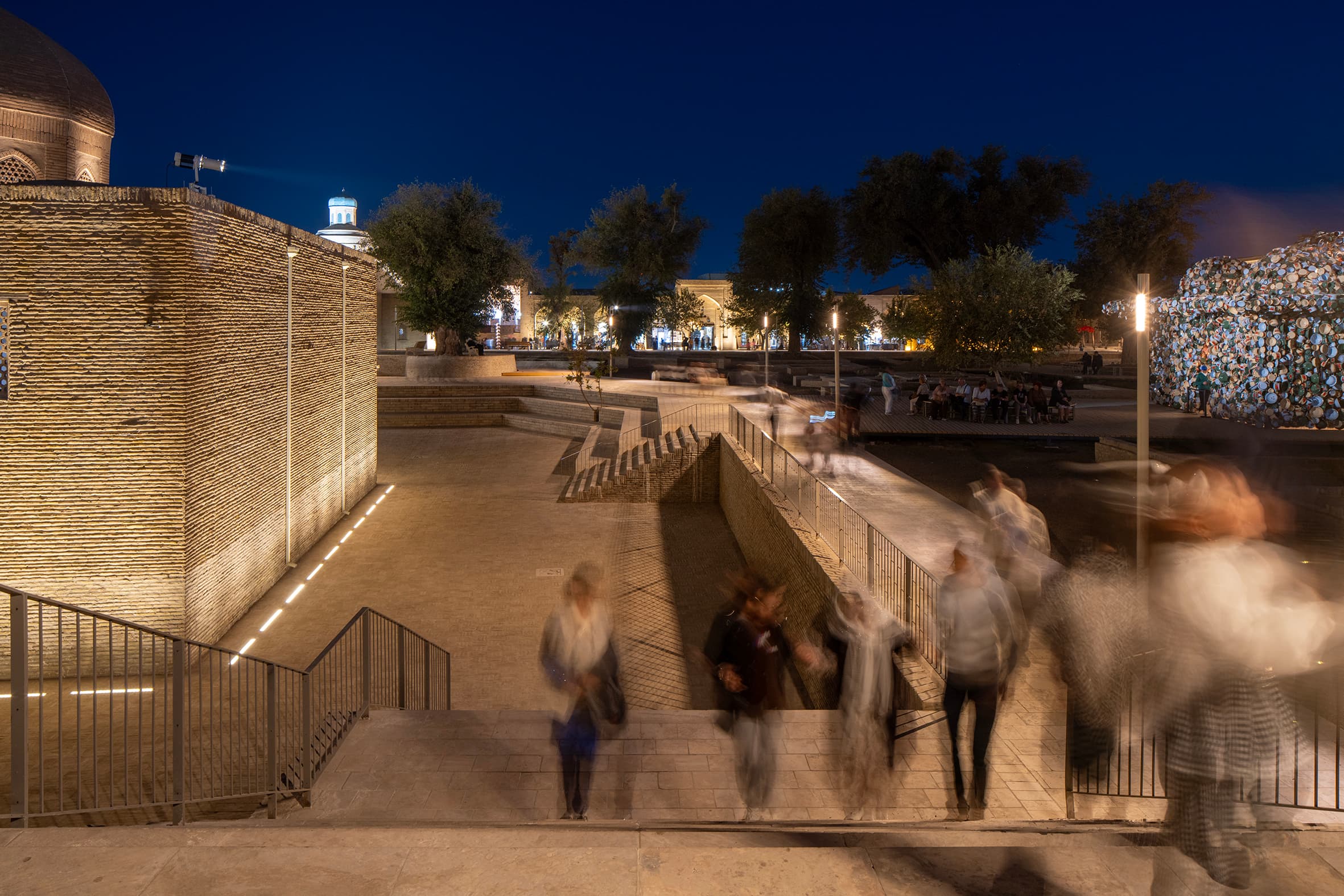
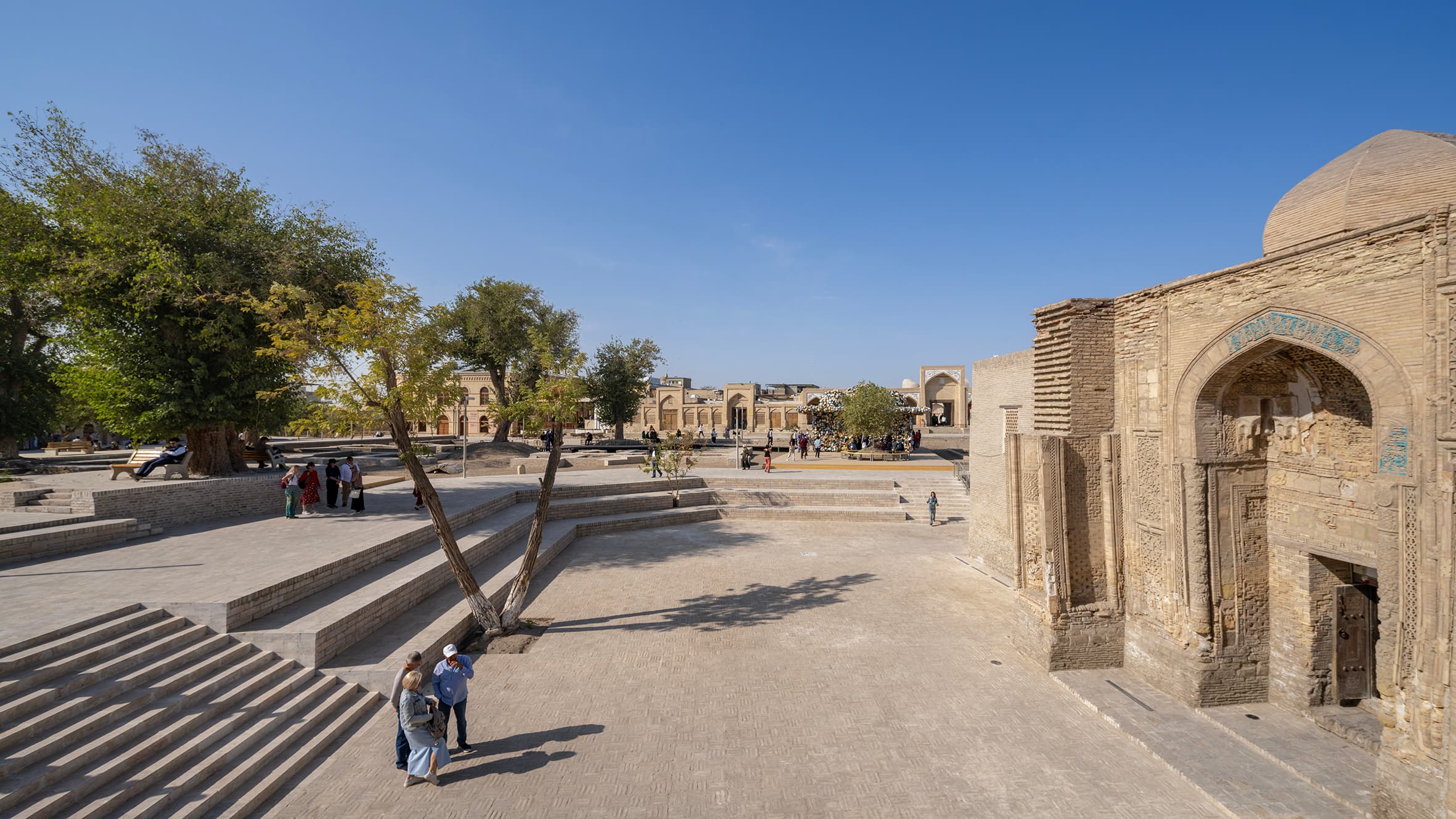
Throughout this long history, Bukhara added layers to its identity, forming a mosaic of Persian, Turkic, Mongol, Islamic, and Soviet influences. Owing to its geographic position, it remains a city in constant transition. It was our responsibility as practitioners to guide our intervention according to the material and cultural traces that can still be seen in Bukhara today. We examined photographs and maps in order to construct a detailed timeline of the growth, destruction, and reconstruction of the urban fabric over the centuries. We came to understand that the dominant attitude towards architectural heritage in Bukhara has been one of continual renewal and addition, rather than strict preservation. The Magoki Attori mosque, for instance, has a layered history: built by the Karakhanids over the remains of a Zoroastrian temple, fragments of which are still visible inside, it has undergone several transformations and uses over time. In the 16th century, an archway was added to the eastern façade, opening the upper level to the surrounding neighborhood. Excavations during the Soviet period in the 1930s revealed an ancient portal four meters below street level. Archeological projects during the 1970s and 1980s opened up a wide space that makes the full volume and all the levels visible, but with the building spatially separated. As part of the renewal project we removed perimeter walls and fences in order to reconnect the mosque with the surrounding space. Stairs, ramps, and plinths link it with the ground, encouraging circulation and accessibility. We followed this pattern of reconnecting the city’s different levels, opening views and allowing access across all the heritage district.

Excavation around Magoki Attori Mosque with Toqi Telpak Furushon bazaar visible in the background, 1977. Courtesy of pastvu.com.

The new amphitheatre in limestone with pavement in reclaimed ancient brick around Magoki Attori Mosque. Photo: Deed Studio. Courtesy of waiwai.
This path of transformation towards a unified urban landscape also involved the development of a network of pedestrian trails. As in many other historic cities, including Beirut, where I am from, cycles of destruction and reconstruction in Bukhara have created substantial voids that disrupt the public realm, fragmenting what was once an integrated urban fabric into a series of isolated monuments. Reconnecting these heritage sites with one another and with the neighborhoods where people live was a fundamental aspect of our work. The project introduces itineraries that invite people to explore the city on foot, connecting the ancient gates with a series of monuments and different zones of the district.
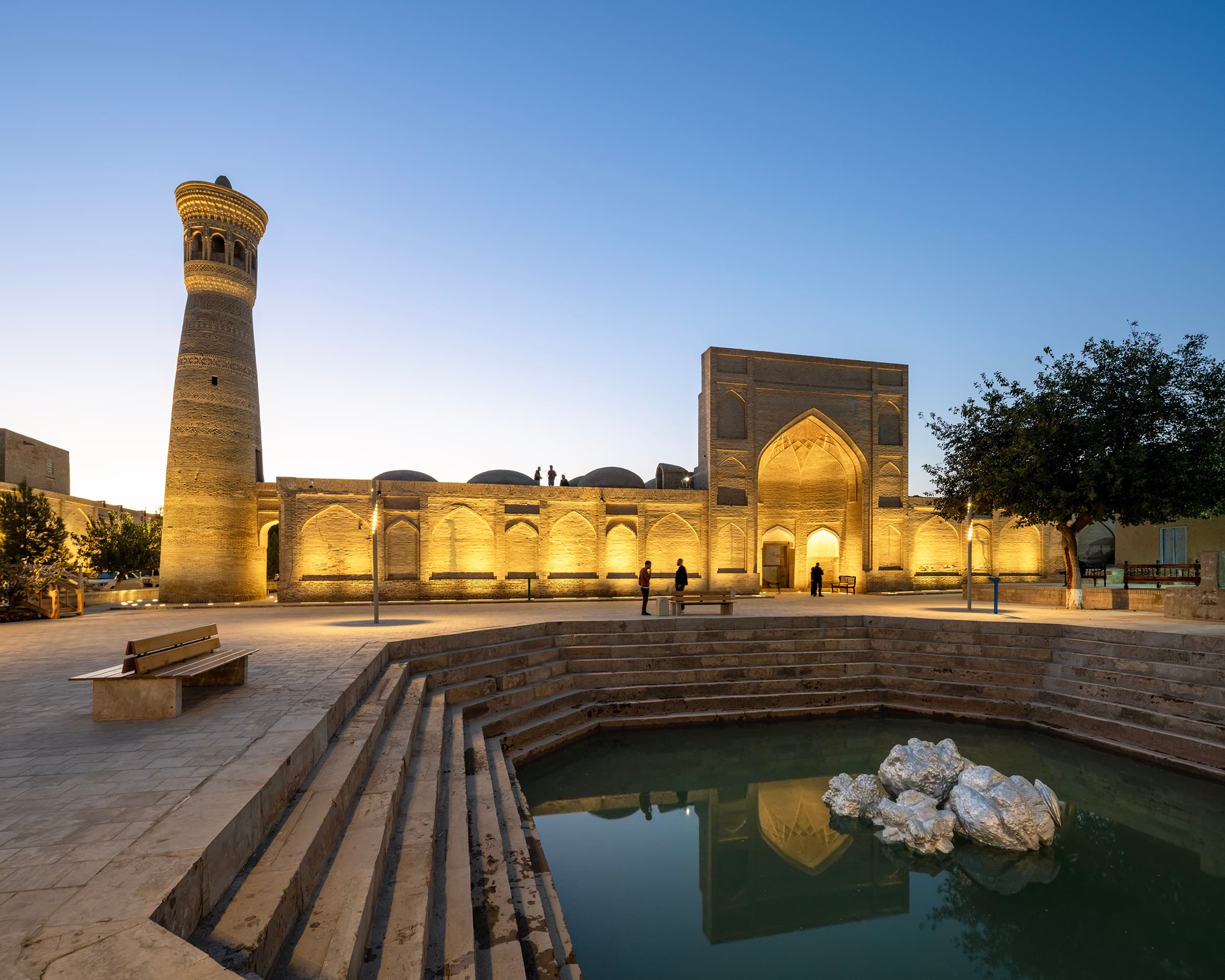
We pulled up the asphalt and formed a continuous pedestrian artery; vehicular routes were minimized or diverted, creating a calmer, human-scale environment. Instead of the bright, road-oriented lighting typically used for traffic, we introduced low-height lamp posts that are pedestrian-friendly and preserve the historic atmosphere. The façade lighting was also redesigned, moving away from extensive wall washers towards a more strategic approach that accentuates key views.

Caravanserai (“caravan palace”) Ayozjon at night. Photo: Deed Studio. Courtesy of waiwai.
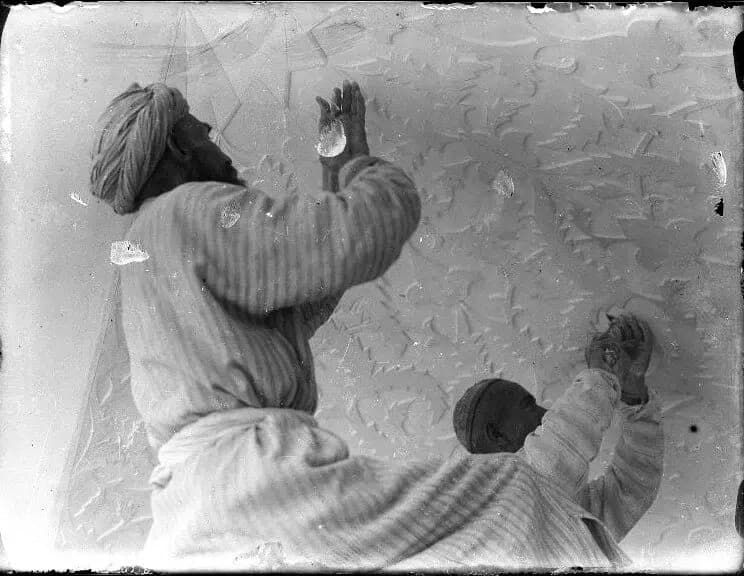
In terms of the history of materials, techniques for working with brick, tile, clay, and decorative terracotta took shape during Bukhara’s cosmopolitan eras and gradually became embedded in vernacular building practices. As maritime trade routes eclipsed the Silk Road, Bukhara became increasingly isolated, along with its intellectual and artisanal culture. Yet this very isolation strengthened the transfer of construction knowledge from master craftsmen to apprentices, largely through hands-on practice and oral exchange. Craft traditions continued to develop over time, incorporating new materials and technologies, including the use of plaster in the late 19th and early 20th centuries.
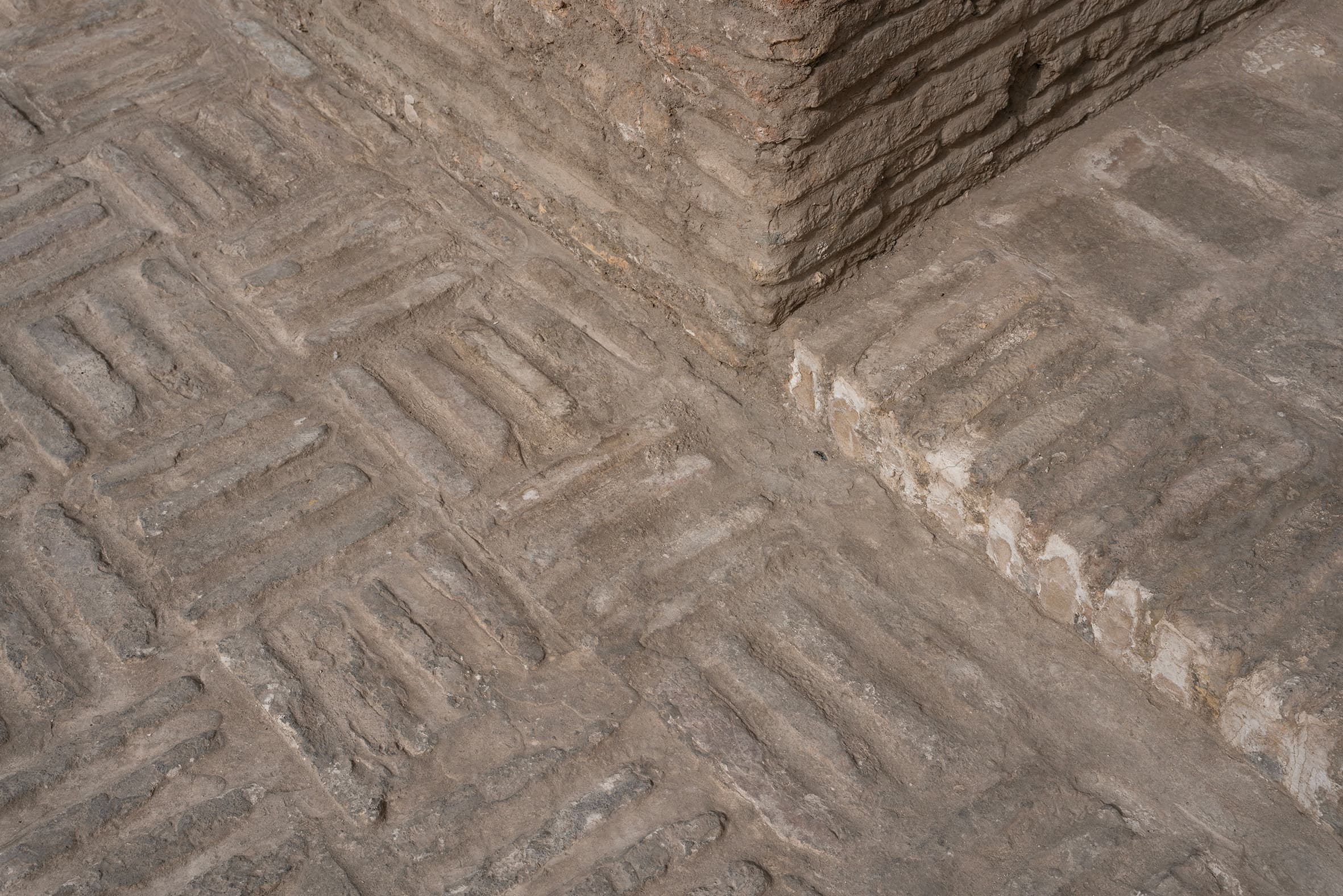
In Bukhara, building practices have long relied on the reuse of materials from earlier structures and the continuity of shared foundations. Over time, bricks have been carefully salvaged and reintroduced into new constructions, reflecting a vernacular approach that values the durability and character of existing materials. In our intervention, reclaimed antique bricks sourced from decommissioned buildings and abandoned sites were used to form the surfaces around Magoki Attori, arranged in patterns inspired by the paving of the 10th century Chor Bakr necropolis.
The inaugural edition of the Bukhara Biennial marked the debut of the heritage district, but from the outset it was essential that the project extend well beyond the opening of this event, unfolding through successive phases of intervention and making the transformation permanent. An important element from the very start was the premise that international artists who come to Bukhara for the biennial had to work in collaboration with local artisans, ensuring an impact on the local craft environment. Some of the biennial’s exhibition spaces were transformed into art workshops, where ceramicists, wood carvers, weavers, and other craftspeople could share space and ideas, maintaining a sense of community rooted in historic neighborhoods. Trades have long been an integral part of local identity in Bukhara but they are traditionally housed in distinct neighborhoods, divided by discipline. The aim was to create a space for work where different forms of knowledge can intersect and be combined.
Bukhara taught us that heritage conservation is not about freezing a city in time. It is about ensuring its continuity. It is a reminder that, sometimes, the best thing an architect can do is to listen and then step back. A city doesn’t need to choose between decay and spectacle. There is another way.
*The 2025 Bukhara Biennial was commissioned by Gayane Umerova (Chairperson of the ACDF) and curated by Diana Campbell, with Wael Al Awar as Creative Director of Architecture, and landscape design by VOGT Landscape Architects.
This essay was published as part of The World Around Summit 2026.
New pavement in front of Magoki Attori Mosque using a traditional brickwork pattern. Photo: Deed Studio. Courtesy of waiwai.
Master carvers restoring the ornamentation on a vault of the Abdulaziz Khan Madrasa, 1927. Courtesy of pastvu.com.
The new amphitheater around the Magoki Attori Mosque. Photo: Deed Studio. Courtesy of waiwai.
Khoja Kalon Mosque at the Gavkushon complex. In the foreground, Fruits by Taus Makhacheva in collaboration with Anel Ulumbekova, Adelina Uzyakova, Anastasiya Kim, Olga Kim, Tatevik Karapetian, and Oydin Nur Centre. Photo: Deed Studio. Courtesy of waiwai.
The new staircase in reclaimed brick reconnecting the heritage site with the contemporary city. Photo: Deed Studio. Courtesy of waiwai.