“We are still living with the effects of green colonization happening in our lands”
After the ADFF:NY 2026 screening of How to Plant a Lake, from our Young Climate Stories series of short documentaries, the film’s protagonists Dayana Blanco Quiroga and Sebas Acampante discussed the successful efforts to clean-up a polluted lake in Bolivia, and revealed that the project has finally caught the government’s attention.
During this year’s Architecture & Design Film Festival (ADFF) in New York, The World Around presented the second season of its Young Climate Stories series of documentaries that each follows a young climate leader and their mentor. One of three films that debuted as part of this series, How to Plant a Lake, spotlights the work of Bolivian activist Dayana Blanco Quiroga, whose fight to save Uru Uru Lake from decades of mining pollution involves reviving an ancient Indigenous planting practice, and spearheading collective action to heal what industry has destroyed. Following a screening of the film on October 15, 2026, Quiroga and her mentor, curator Sebas Acampante, sat down with The World Around executive director Beatrice Galilee for a panel discussion that expanded on the themes in the film.
Read an edited excerpt from the conversation below.

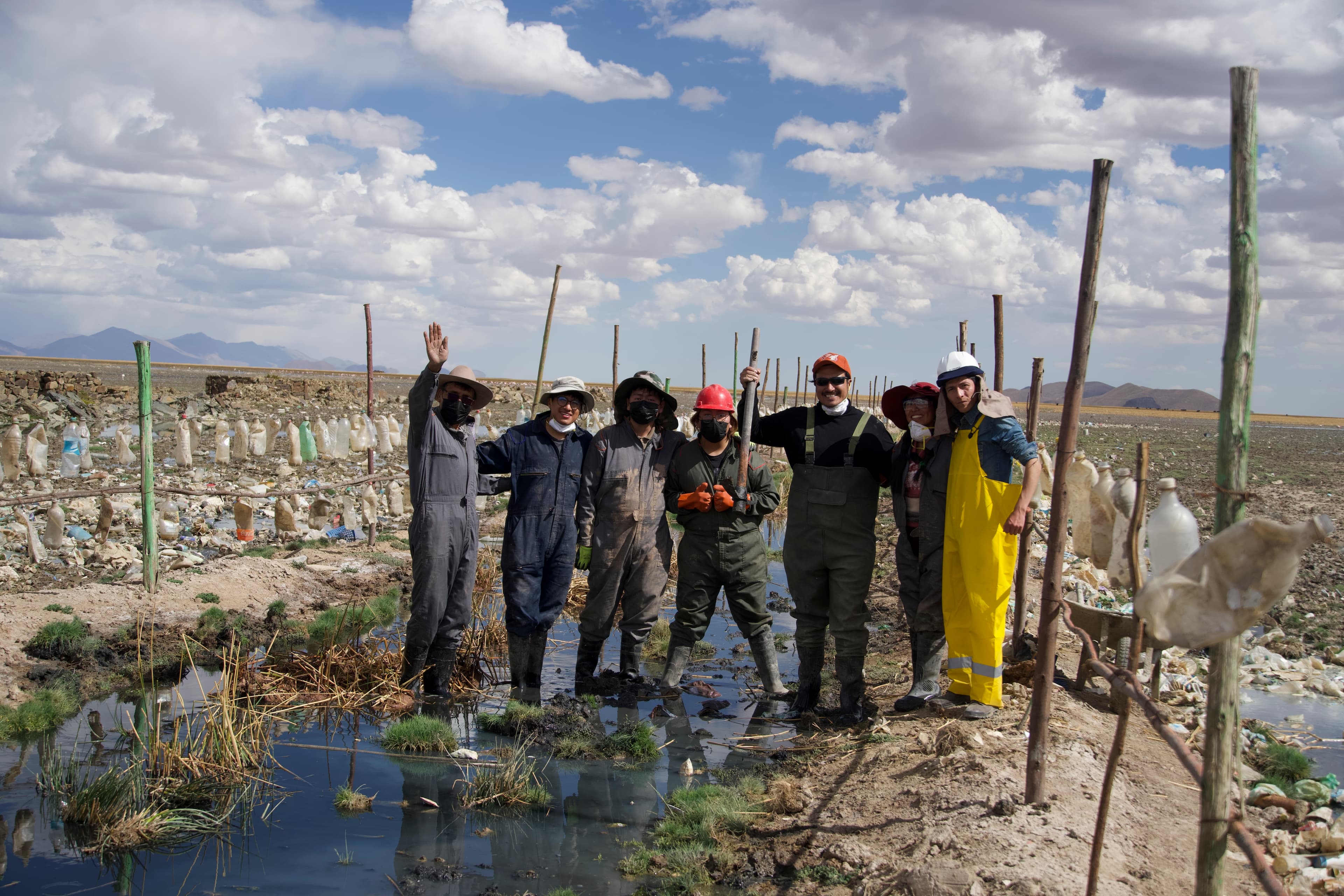
Dayana Blanco and Team Uru Uru. Photo by The World Around.
Beatrice Galilee: Dayana, the film was shot about a year ago. What is it like to see it on the big screen now?
Dayana Blanco Quiroga: When you do something every day, sometimes you assume that it’s just part of your routine. Watching this film reminds me about the power that we carry: the power to change things and not simply say, “This is happening, I can do nothing.” I always remember my father’s words. He says that if we leave this world having planted 50 trees, or more totoras, it means we have been good human beings.
BG: Can you explain how you encountered the totora and how you began the process we saw in the film?
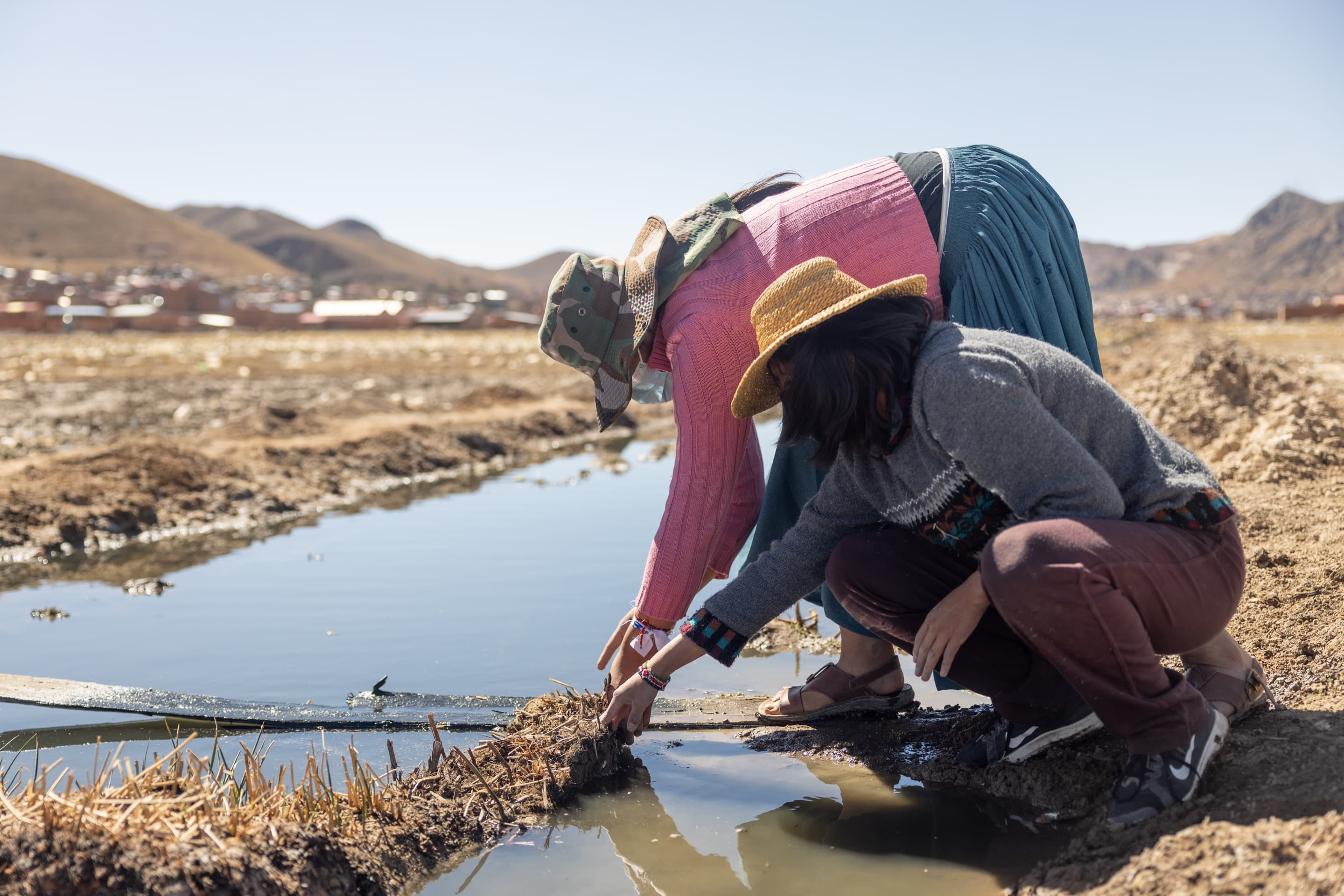
DBQ: Totoras are native aquatic plants that my ancestors used to purify water for their cows. Those waters were not in the condition the lake is in now, so we are challenging these plants. We bring them from a dry place and put them in the water. They start to turn green, they start to grow, and they start absorbing the [polluting] metals. We have also used totoras for building houses and for making handicrafts. They have always supported us, and now they are supporting us in restoring the lake.
BG: This is not only your observation. You also went to the labs to test it, right?
DBQ: Sometimes it’s conflictive to contrast ancestral, indigenous knowledge with scientific knowledge. As young people, we are trying to be a bridge. Many people ask how we prove the totoras are working, so we partnered with the university, which helps us test the water where we plant. We know they are working and we don’t doubt that. But we accept that some people also want to understand how.
Sebas Acampante: That was our debate yesterday. We walked a lot of blocks talking about this need for validation from Northern science, to hear: “Your ancestral methods that have worked for ages still work.” But the moment the community saw the actual problem in the lake, it was not because of a measurement of acids. It was because of the lack of flamingos.
“Watching this film reminds me about the power that we carry: the power to change things and not simply say, “This is happening, I can do nothing.”

Since 2019, Dayana Blanco, an Aymara indigenous woman, and her Uru Uru Team have been adapting the ecological knowledge of their ancestors to restore the lake to health. Photo by The World Around.
BG: Sebas, you went to Bolivia after getting to know Dayana over almost a year of online conversations. How different was it to see her work in person?
SA: It made me aware of the dimension of the problem. These cultures are not meant to go through what is generated by ambition and greed. With these design solutions, they found a way of protecting themselves with the knowledge they have from their ancestors, which is something that no university is talking about.
BG: Why do the flamingos matter so much to the community?
SA: After our trip, I became more connected with flamingo culture. The Moche in Peru use the flamingo as a symbol of self-transformation, because it is born with gray feathers and develops these neon pinks. They also see it as an icon of resiliency, because it is the only bird that can thrive in volcanic lagoons.
BG: Sebas, what did you take away from the mentorship?
SA: Yesterday Dayana asked me what my development as a mentor was, and I thought I was slowly becoming a mentee. After any conversation we have, my beliefs around curation, and even my ways of expressing myself about ancient cultures, are reprogrammed. This culture is still alive, still progressing in parallel with us, and has a lot to say. And we have a lot to learn.
“After any conversation we have, my beliefs around curation, and even my ways of expressing myself about ancient cultures, are reprogrammed.”

Dayana Blanco Quiroga with her mentor Sebas Acampante
BG: Dayana, what is it like to see your work through the lens of a design program?
DBQ: I am not an architect and I don’t have expertise in design, but I have learned many things through the lens of Sebas and the Young Climate Prize. We can transform these things into beautiful and marvelous things. I am at the beginning of this, because it is hard work, and we need to give more stakeholders the responsibility to do the things they need to do.
Audience: Have you seen wildlife coming back to the lake?
DBQ: Yes. If you go to our Instagram, you will see flamingos standing in front of the totoras we are planting. They are coming back to where we have planted, because totoras are also used for building their nests. They are not only cleaning the lake, they are also the house of the flamingos.
Audience: How has the community responded?
DBQ: Sometimes they say: “You can do it because you are young, you have free time.” But they are guiding us with their knowledge and with all the things we need for planting the totoras. It is very collaborative.
“Restoration and conservation always go hand in hand with politics. ”

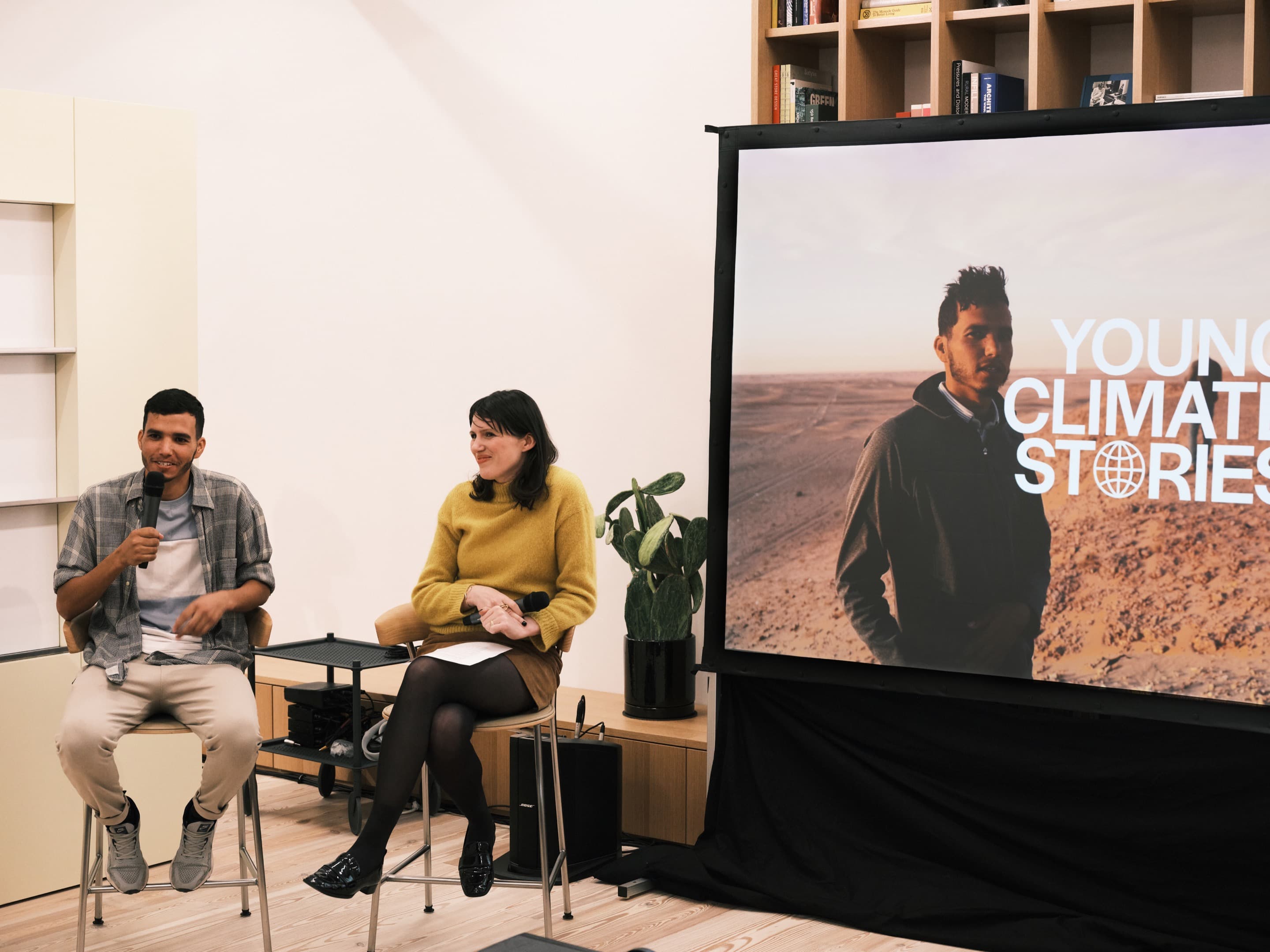
Dayana Blanco Quiroga and Sebas Acampante in conversation with Beatrice Galilee after the screening at ADFF:NY
Audience: Is the Bolivian government doing anything about the illegal mining?
DBQ: We want to protect the lake with rights, because in Bolivia we have the rights of nature. We have presented the proposal of the law to the legislature, and we will see if it advances.
SA: Because of the visibility on social media, the government approached the Uru Uru team for the first time in more than five years. We are trying to see whether it is something serious, or whether they want to get the hang of the greenwashing thing.
Audience: Much of this stems from colonial history. What do you think about that?
DBQ: Restoration and conservation always go hand in hand with politics. If we have laws and we don’t have actions, it will not work. If we have only actions and we don’t have laws, it will not work. Both need to go hand in hand. We are still living the effects, that kind of green colonization that is happening in our lands.
The World Around presents Young Climate Stories
A 4Hawk Production
Made possible by MillerKnoll
Young Climate Stories is an ongoing multimedia series that follows the young people at the forefront of climate action. Each story centers a different participant from the Young Climate Prize, exploring how the next generation is working to build a livable, equitable, and sustainable future. Alongside their mentors, these young innovators bring into focus the urgency of the climate crisis and share how they are using their voices, ideas, and designs to reimagine what's possible for communities and the planet.
Young Climate Prize
Related Video
Uru Uru Team