“If I want to save a lake, it’s not something I can do alone”
The inspiring work of Dayana Blanco Quiroga, a young Aymara woman restoring the heavily polluted Lake Uru Uru in Bolivia, is documented in a new film in our series of Young Climate Stories.
By Ana Minujin
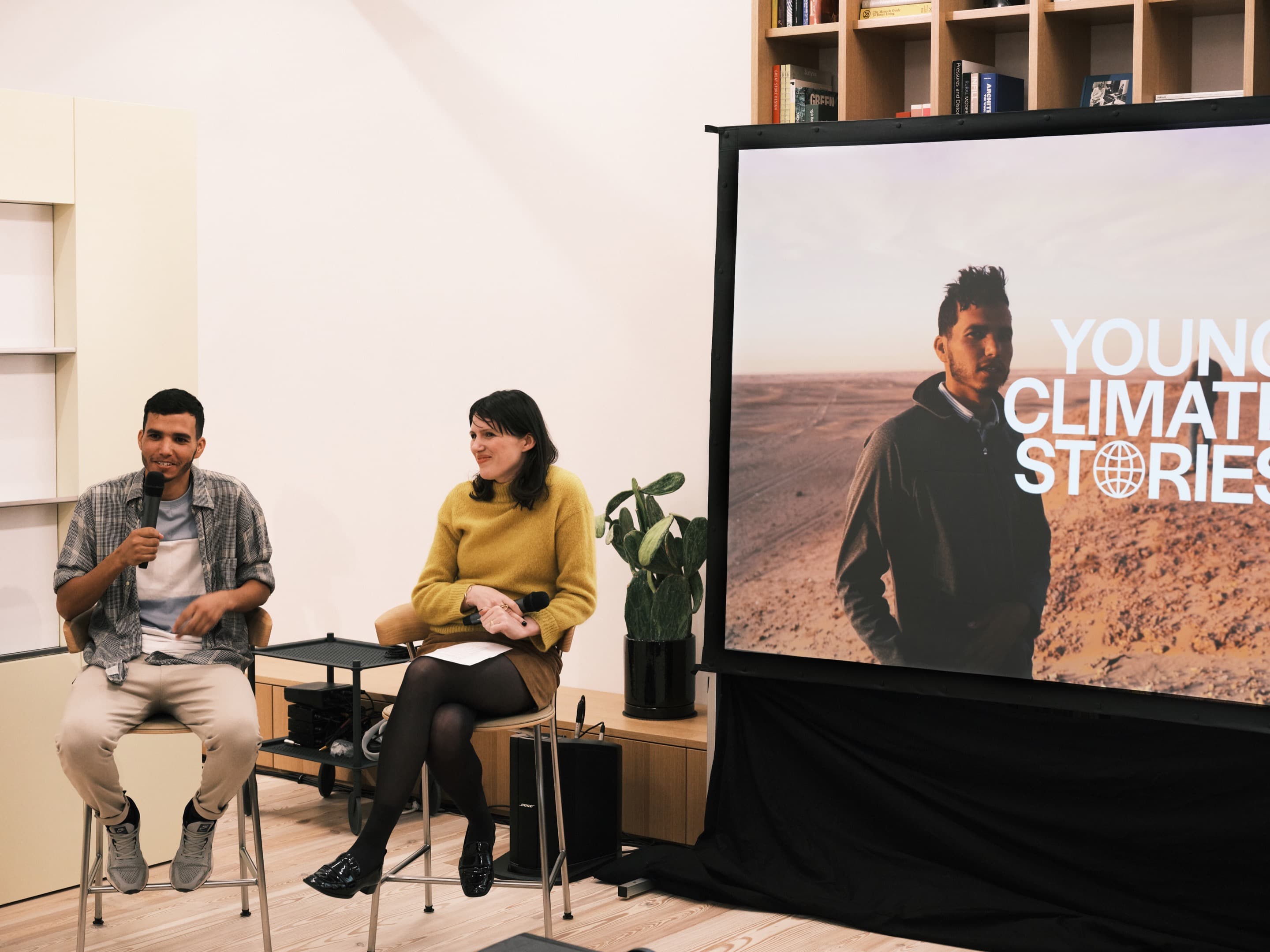
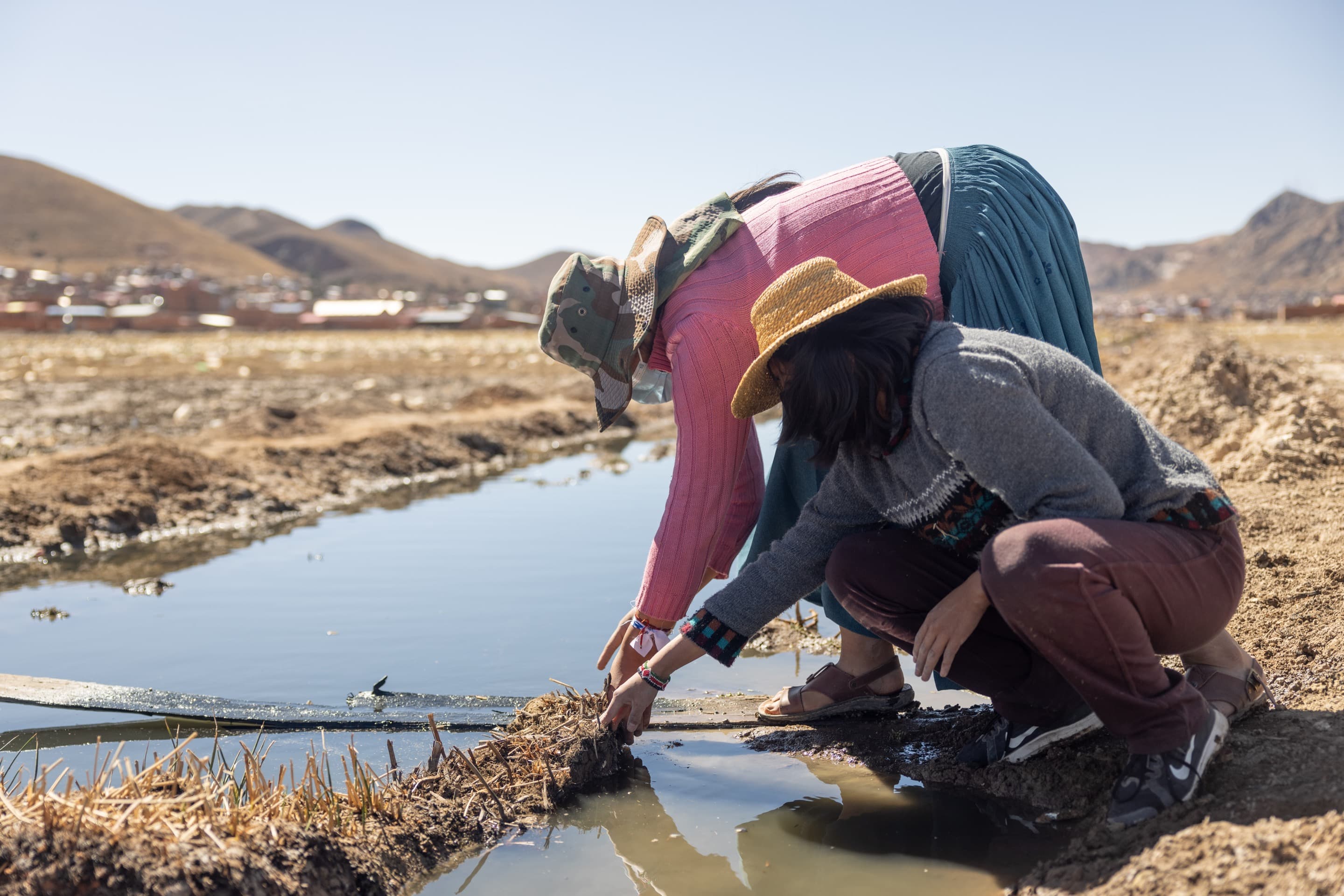
Bolivia’s Lake Uru Uru, its ecosystem, and its local community are all at risk as a result of mining waste pollution and climate change. Young Climate Prize alum Dayana Blanco Quiroga, her Team Uru Uru, and the rest of the Aymara community are working tirelessly to restore the body of water for future generations, by combining indigenous knowledge and design thinking. The latest Young Climate Stories documentary, How to Plant a Lake, follows Blanco Quiroga and her mentor Sebastian Acapante, a Mexico-based designer and illustrator, as they implement natural heavy-metal extraction techniques to help address the various issues facing Lake Uru Uru. As the film debuts at the 2026 Climate Film Festival in New York, The World Around’s Ana Minujin sits down with the duo to discuss the details of the project, and the importance of industrial design in climate action.

Bolivia’s Lake Uru Uru, its ecosystem, and its local community are all at risk as a result of mining waste pollution and climate change. Photo by The World Around.
Ana Minujin: Let’s start with a brief introduction. Where are we, and why are we here?
Dayana Blanco Quiroga: I’m Dayana Blanco, an indigenous Aymara woman from Bolivia. We’re in New York with my mentor to present the work I’m doing in Bolivia with my community: we’re restoring a lake that is very important to us, which we’ve lost due to mining pollution, plastic waste, and climate change. We’re restoring the only home we have; we don't want to lose our roots, our hearts and souls are connected to that place. We want to leave it for future generations, and recover the harmony our grandparents had with everything that inhabits this world.
Unfortunately, some aim to destroy our home for the sake of extracting minerals. That’s why we’re fighting to save it. I’m here to share our struggle and how this deep community work is helping us move forward. This is the only thing we can leave for future generations. Although we’ve often protested and asked authorities for solutions, we haven't received a positive response from them.
AM: Sadly, this is common across Latin America. What I find interesting about your project is that you’re protesting, but you’re also offering a way of thinking about repair. Why did you decide to fight to stop the mining, but also to chip in to the project?
DBQ: Well, this is the only home we have and it’s changing. It’s very sad to see how the flamingos are disappearing. It’s sad to wake up every morning and smell those heavy odors. It’s sad to see that although there are many laws in Bolivia for natural rights, they aren't enforced.
That’s why we’re taking action even when the odds are against us. And it has worked! Many people said the totora reeds would die, but they haven't; they are restoring the lake, and that is a great joy for us.
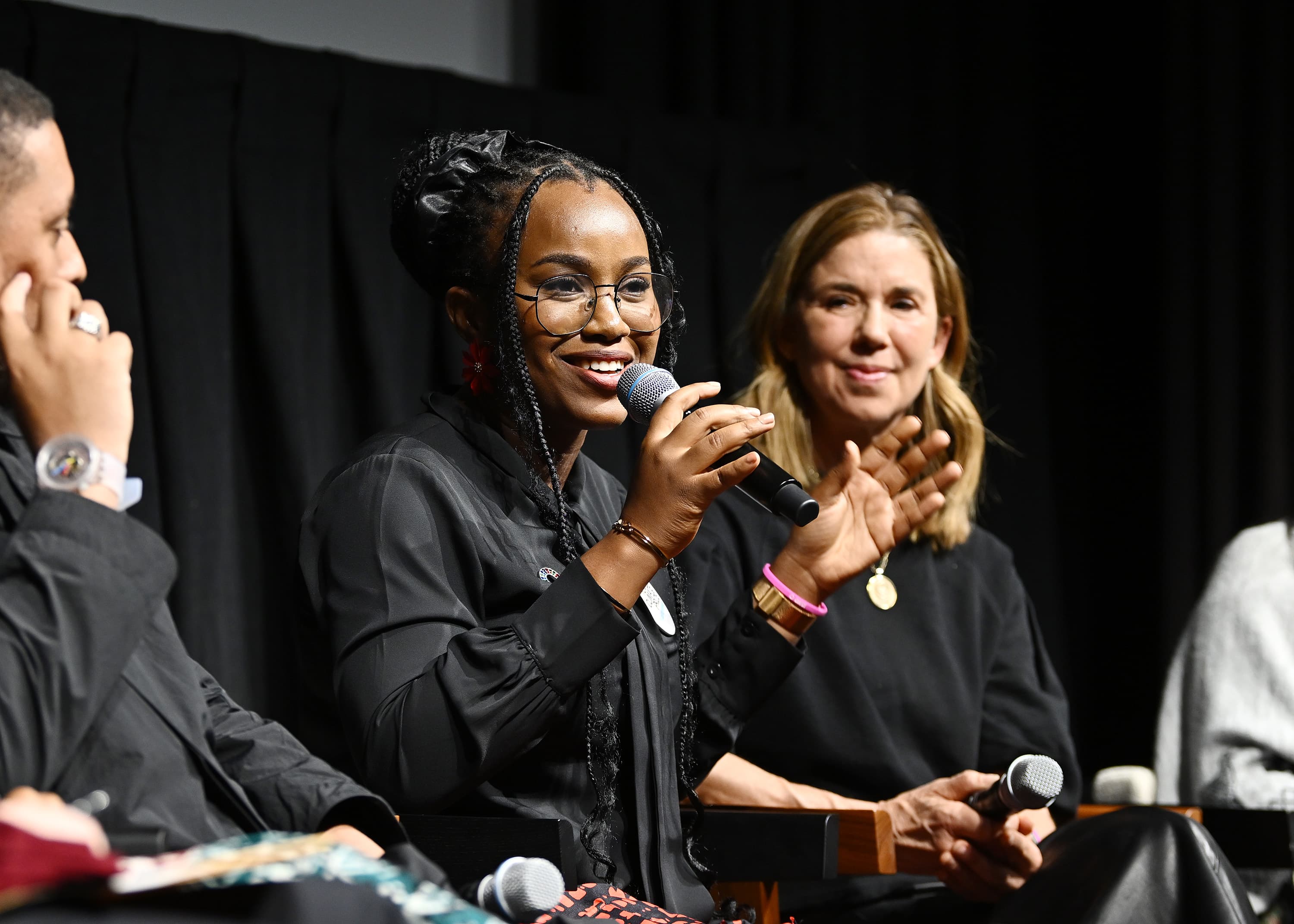
AM: At The World Around Summit 2025, you spoke with such a deep connection to your ancestors; it’s like they were in the room with you.
DBQ: I do feel the energy of our ancestors. We are a small community, but we can do a lot. We have faith that we can save what little remains. Even if it isn't possible, we will at least know we fought for our lake. We aren't the ones to blame, ultimately, the fault lies with human ambition.
“There’s a harmonious relationship between humanity and nature that is well-expressed in ancestral communities.”
Dayana Blanco and Team Uru Uru. Photo by The World Around.
AM: Sebas, you occupy a space representing a group of designers. What is it about Dayana’s project that makes you want to expand it?
Sebas Acapante: I feel there is something there. There’s a harmonious relationship between humanity and nature that is well-expressed in ancestral communities. Over the 15 years I’ve been working in curation, I’ve always tried to bring pre-Columbian knowledge to the forefront because I feel that is where the answers to current problems lie.
When you rewind the history of design, you find more consciousness of sustainability. That knowledge is extremely precious, and often ignored. Meanwhile, the voices that are amplified belong to a cultural and economic hegemony keeping us in a collective slumber, believing things are fine the way they are.
I had the privilege of working with the Wichi community, an Indigenous population native to the Gran Chaco region in northern Argentina and southern Bolivia, for the London Design Biennale. When we arrived, the interpreter introduced the team and myself. When they introduced me as the curator, there was a clamoring. The community went and brought back the community's shaman. They had confused "curador" (curator) with "curandero" (healer).
When I explained my role (working in artistic and design environments selecting relevant art for our people), the man thought for a moment and replied in Wichi. The interpreter explained: "Then we are both healers. My domain is nature. I understand its frequencies and know what to take from them to heal my people. Your field is art. You know what you need to take from art so your people are well."
I realized that I needed to listen to these voices, to acknowledge what is ignored, and to amplify a message that isn't mine, but one I feel aligned with.
AM: Do you feel that what the world needs are projects or voices more connected to the pre-Columbian?
SA: Totally. We must listen attentively and respectfully to voices like Dayana’s. The Aymara community is lovely. They have so many expressions for affection. When you express affection in your language, you apply it to your work, making it more generous and empathetic. That is the kind of mentality that excites me.
DBQ: For me, words like Munaña (to want/to be able to), and Tiña (to do/achieve) are vital. We also have Suma Qamaña, which means "living well," and Ayni, which is reciprocity. These principles connect me to my community and guide our work. They help us embrace each other when we feel we can’t go on.
“This is a path to redefine the meaning of design. Applying that design language to a home that truly has a purpose. That is what makes this project spectacular.”

Since 2019, Dayana Blanco, an Aymara indigenous woman, and her Uru Uru Team have been adapting the ecological knowledge of their ancestors to restore the lake to health. Photo by The World Around.
AM: So, how did the first meeting between you two go?
DB: We met through the program. From the beginning, Sebas was very attentive to my needs. He has helped me connect with other organizations like Cultural Survival that support these projects across Latin America. It’s so important to learn from someone who truly stands with you. I felt that Sebas stands with our struggle; he isn't here to impose things. Often, when people come to our community, they want to change things, but we want to lead our own work. Sebas listens to what we need and how we want to address our challenges. He’s a friend who guides me, helps me, and pushes me forward.
SA: The mentorship was a complete experience. I found a way to amplify causes and rethink my own role. I’ve worked in many institutions, such as the Centro Cultural de España and UNESCO, but suddenly I was finding spaces where my contacts were useful. I realized that my network could be used to solidify and empower this project.
I also realized my own limitations, especially regarding funding. I wanted to give more than I had, so I signed up for a degree in cultural and economic management. The mentorship taught me that if I want to save a lake, it’s not something I can do alone. Adding my energy to the torrent that Dayana and her community have been working on for so long is so rewarding.
DBQ: For me, it’s about the human side. Before we started working, Sebas would always ask "How are you?" in our language, which connected us and made me feel like I was in a safe space. I hope we can recover the peace and balance with everyone and especially with nature.
AM: I’m really looking forward to seeing the rafts and the totora reeds.
SA: Me too. I want to see how industrial design ideas can help. I asked Dayana to send me all the types of waste they find so we can design rafts using what they have, cleaning up while applying that process to technology. When you study design, everything revolves around pleasing institutions or companies. This is a path to redefine the meaning of design. Applying that design language to a home that truly has a purpose. That is what makes this project spectacular.
The World Around presents Young Climate Stories
Made possible by MillerKnoll
Young Climate Stories is an ongoing multimedia series that follows the young people at the forefront of climate action. Each story centers a different participant from the Young Climate Prize, exploring how the next generation is working to build a livable, equitable, and sustainable future. Alongside their mentors, these young innovators bring into focus the urgency of the climate crisis and share how they are using their voices, ideas, and designs to reimagine what's possible for communities and the planet.
Related videos
Uru Uru Team
%2520Projects%2520Images%25205%2520(1).jpeg&w=3840&q=75)
Uru Uru Team at Summit 2025