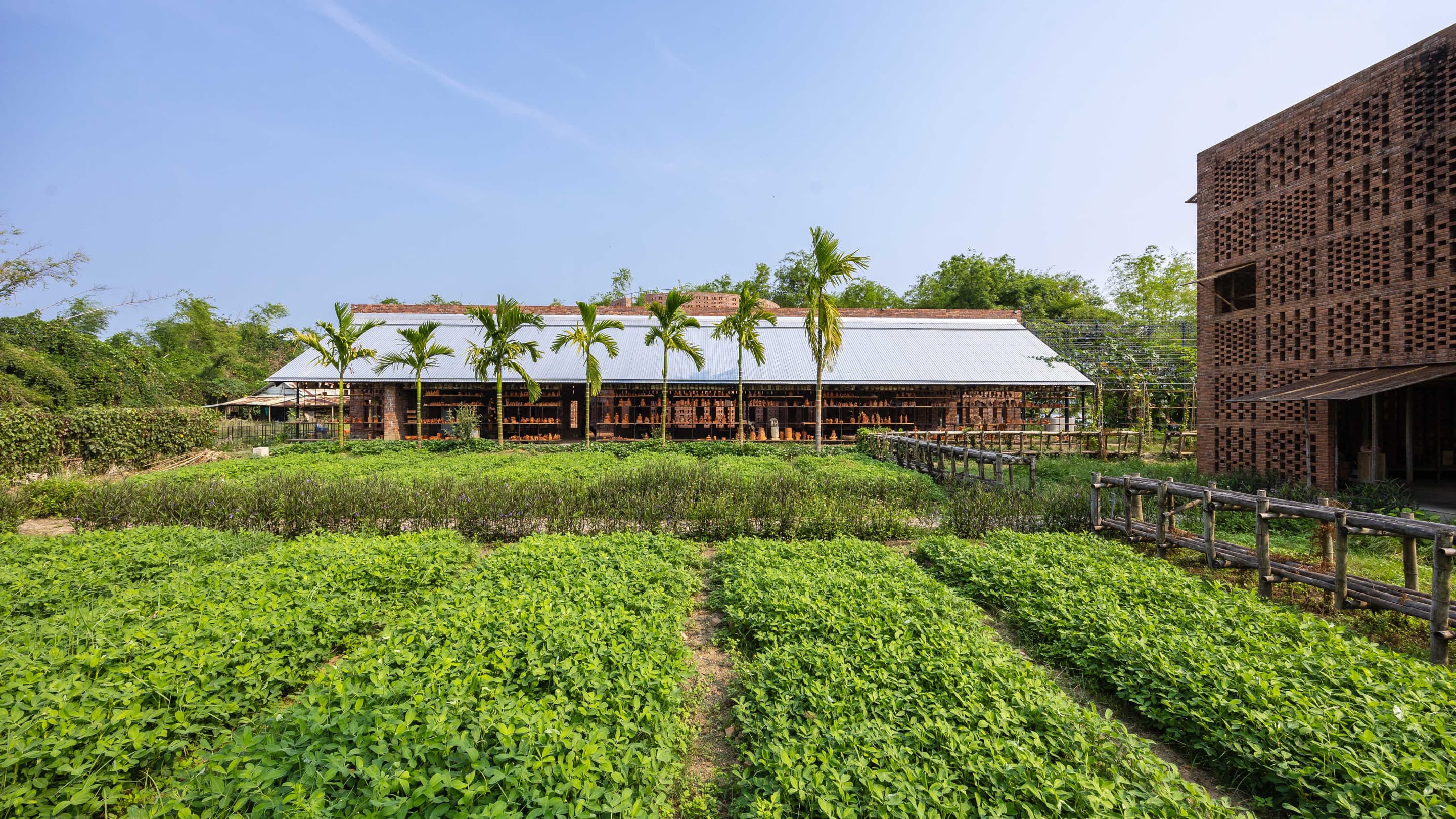
Kochi-Muziris Biennale 2025: For The Time Being
At India’s largest international contemporary art exhibition, works unfolded through a city shaped by trade, memory, and uneven encounters.
By Sunena Maju
Cinthia Marcelle, 'History' (Version Mattancherry) at Anand Warehouse. Photo courtesy Kochi Biennale Foundation.
The Kochi-Muziris Biennale (KMB), India’s largest international contemporary art exhibition, unfolded across Fort Kochi and Mattancherry from December 12, 2025, through March 31, 2026, drawing on the region’s layered history as a port shaped by trade and colonial exchange. Its sixth edition, For the Time Being, was curated by Nikhil Chopra and brought together 66 artists and collectives whose practices engage global concerns, from labour and ecology to memory and displacement. These works were encountered through Kochi’s built and social environment, where site, audience, and infrastructure shape how contemporary art is experienced.
At Kochi Muziris Biennale 2025, I came across an installation by Brazilian artist Cinthia Marcelle, titled History (version Mattancherry) (2025). Defined as “a participatory project that focuses on the social life of objects, framing repair as a gesture of care and collaboration,” Marcelle’s installation had a striking yellow board. On the board were the words, “HOUSE OF REPAIR,” followed by “Are you holding onto a broken object that means a lot to you?” Below them were the Malayalam words (the official language of the state) which read, “നിങ്ങളുടെ ഹൃദയത്തോട് ചേർന്നു നിൽക്കുന്ന കേടുപാടുകൾ സംഭവിച്ച ഏതു വസ്തുവുമാകട്ടെ ഞങ്ങൾ അത് സൗജന്യമായി നന്നാക്കി തരാം.” Which translates as “We will repair any damaged item that is close to your heart, free of charge.” The Malayalam words weren’t a deep question that made you ponder; instead, it was an offer: “Let us fix it for you.” To someone who thinks in both Malayalam and English, the entire Kochi Muziris Biennale 2025 echoed the provocations of this piece; posing questions in English and providing reassurances in Malayalam.
But to fully understand the Kochi Muziris Biennale (KMB), you have to begin elsewhere. With the neighbourhoods of Kochi and Muziris and the history they share and shape. In the 1st century CE, Muziris was one of the most significant port cities in the Indian Ocean trade network, connecting the Malabar Coast to Roman, Arab, and Greek worlds. Its decline following the floods of 1341 marked a geographical shift. Inheriting trade routes and a layered history of exchange and extraction, Kochi stepped into the role. Portuguese, Dutch, and British occupations followed, each leaving behind fragments in the city which are still visible in architecture, infrastructure, language, and social life. With all these layers accumulated over centuries, Kochi is not a city that unfolds chronologically. It is Marcelle’s installation board. A city loved enough by the locals to always be mend, repaired and protected without ever being replaced, and seen by everyone else as a place of profound thoughts, roots, and history.
%2520(2025)%252C%2520Pepper%2520House%252C%2520Fort%2520Kochi%2520(1).jpg%3F2026-06-02T04%3A00%3A50.549Z&w=3840&q=85)
Maria Hassabi, 'Passage (no. 2)' (2025) at Pepper House, Fort Kochi. Photo courtesy of Kochi Biennale Foundation.
The sixth edition, curated by Nikhil Chopra and titled For the Time Being, leaned into temporality, duration, and attention through works of 66 artists and collectives. This year’s biennale asked visitors to slow down, think and revisit the histories that are appearing to be repeated and forgotten, simultaneously. It didn’t overwhelm but it challenged the pattern in which you see, translate and consume art and information. Bani Abidi and Anupama Kundoo’s Barakah (2025) took the form of a functioning café, where architecture, food, and social exchange converge within a structure built from locally sourced materials using vernacular techniques. Through communal dining on illustrated dastarkhwans (a traditional dining spread), the work reframed hospitality as a civic practice, something shared, not staged. This insistence on slowness by the sea felt like a counterpoint in a biennale that spans multiple sites and sensory overload.
Material and social histories came through more directly in Birender Yadav’s work, which drew from lived experiences of caste, labour, and migration. In Only the Earth Knows Their Labour (2025), Yadav built an immersive kiln-like environment where brick, soil, and terracotta carry the imprints of migrant labourers from Mirzapur. In the physical absence of the workers, their presence is felt through handprints, objects and material itself. Adrián Villar Rojas’s Rinascimento (2015–21), an assemblage of discarded refrigerators function less as appliances and more as ecological chambers. Inside them, organic matter—food, plants, residue—existed in varying stages of decomposition, nodding to the fragility of living forms and their relationship to machines.
Maria Hassabi’s Passage (no. 2) (2025) changed a corridor into a reflective environment where mirrored gold and black surfaces register the movement of passing bodies. At first, it reflects. Then, gradually, it records. Scratches and marks accumulate over time, making the image and human reflection unstable. Utsa Hazarika brought together sculpture, plant life, film, and archival material to examine how power is spatially constructed and resisted across geographies. Through works like Yantra (32° N / Horizon) (2025) and Bloom (10°N / 28°N) (2021–ongoing), alongside film and cartographic archives, Hazarika linked astronomy, ecology, and protest, situating colonial extraction and Indigenous resistance within shared temporal and planetary frameworks.

Ibrahim Mahama's Parliament of Ghosts (2017–) at Anand Warehouse in Mattancherry. Photo courtesy of Kochi Biennale Foundation.
Even though primarily an art biennale, at KMB, architecture is not a backdrop; it becomes an active participant. The adaptive reuse of colonial-era warehouses, trading compounds, and industrial structures ensures that the exhibition is never spatially neutral. These sites carry histories of labour, storage, and exchange, and shape how the works are encountered. The curatorial planning each year is done keeping in mind the various venues across the city, none of which is a plain white gallery wall. Ibrahim Mahama’s Parliament of Ghosts (2017–), presented at Anand Warehouse, transformed a former colonial godown into a space of historical and material inquiry, where walls lined with repaired jute sacks and chairs lined in front of them carry the residues of trade and round table conversations that dictated them. An artist whose work already incorporates materials such as jute sacks, objects already embedded within global trade networks, was placed inside an old warehouse, thus making the place and piece part of the same story. Additionally, architecture participates not only through large installations, but in how people move, between sites, through weather, through interruptions. The walk between one venue and another, or hiring autorikshas (Kerala’s version of a tuk tuk), asking locals for routes and navigating the ways inside the venues add to the interaction and memory. In the absence of corporate chain eateries in the locality and the harsh heat of Kerala, roadside stalls and local shops are also a point of interaction with locals, culture and the art of art making.
While the biennale extends to the social-economic and cultural growth, like many large festivals, KMB also contends with structural inconsistencies. Issues of coordination, production quality, and institutional continuity remain visible. The ambition of KMB often exceeds the systems that sustain it. At this scale, those gaps matter, particularly when artists have been turning against the principles of a biennale that takes pride in calling itself an “artist-led” festival. Over the decades, KMB controversies spanned from poor coordination, late payments for labor, unexplained budgets, to instability in leadership and other allegations. In 2019, Kochi-Muziris Biennale Foundation was accused of Non-payment of Dues to workers. In 2022, the biennale was postponed the night before it was originally due to open, on December 12, due to organizational issues. However, these limitations do not diminish its significance. Despite the criticisms, KMB has thrived and expanded. In Kochi, the biennale does not feel imposed. It feels entangled, sometimes unevenly, with the city’s own histories of movement, exchange, and transformation. It has become an unsung theme for the KMB to have art as a process, never finished and always in the making.
Having grown up around this city, the biennale and the creative energy, KMB sits at a more personal level to me. Returning this year, after several years of engaging with contemporary art in the US, the distinguishing characteristic of KMB to other more famous art biennials around the world is clearer. Even in the presence of all the international artists in the roster, KMB will always be regional. It cannot be where the world comes to see 'art,’ it will be a place where the world comes to see art in conjunction with a city with much colonial history. Contemporary art in KMB will always feel like a time travel to the past. To people who come from the trauma of colonisation, this becomes a reminder. For people from countries with a coloniser past, this will be an uncomfortable place to see the remnants of their ancestral actions still visible decades and centuries later. As mentioned in the introduction of this piece, Kochi was mended and repaired and healed, which means the scars and stitches and additions are visible. So, even if you cover all the walls with cloth or panelling to separate the art from its context, the art will never be separate from where it sits.
For KMB to function as a people's biennale, it requires responsibility, sensitivity, and genuine ownership; not ownership as inclusion, but ownership as authorship. In six editions, not one curator has been Malayali, except for the co-founder, Bose Krishnamachari, who also stepped down mid-edition in January 2026. Kochi-Muziris Biennale is not another biennale named after its location. Muziris in the name is not a geographical marker; it is a historical and civilisational claim. To invoke it while consistently looking outside the state for curatorial leadership is a structural contradiction. A global curatorial perspective is needed, but a regional curatorial leadership is essential for a biennale of this nature. If not, the same thoughts will still be questions in English and reassurance in Malayalam.
Moonis Ahmad Shah's 'Accidentally Miraculous Everyday From That Heaven' at Pepper House, Fort Kochi. Photo courtesy of Kochi Biennale Foundation.
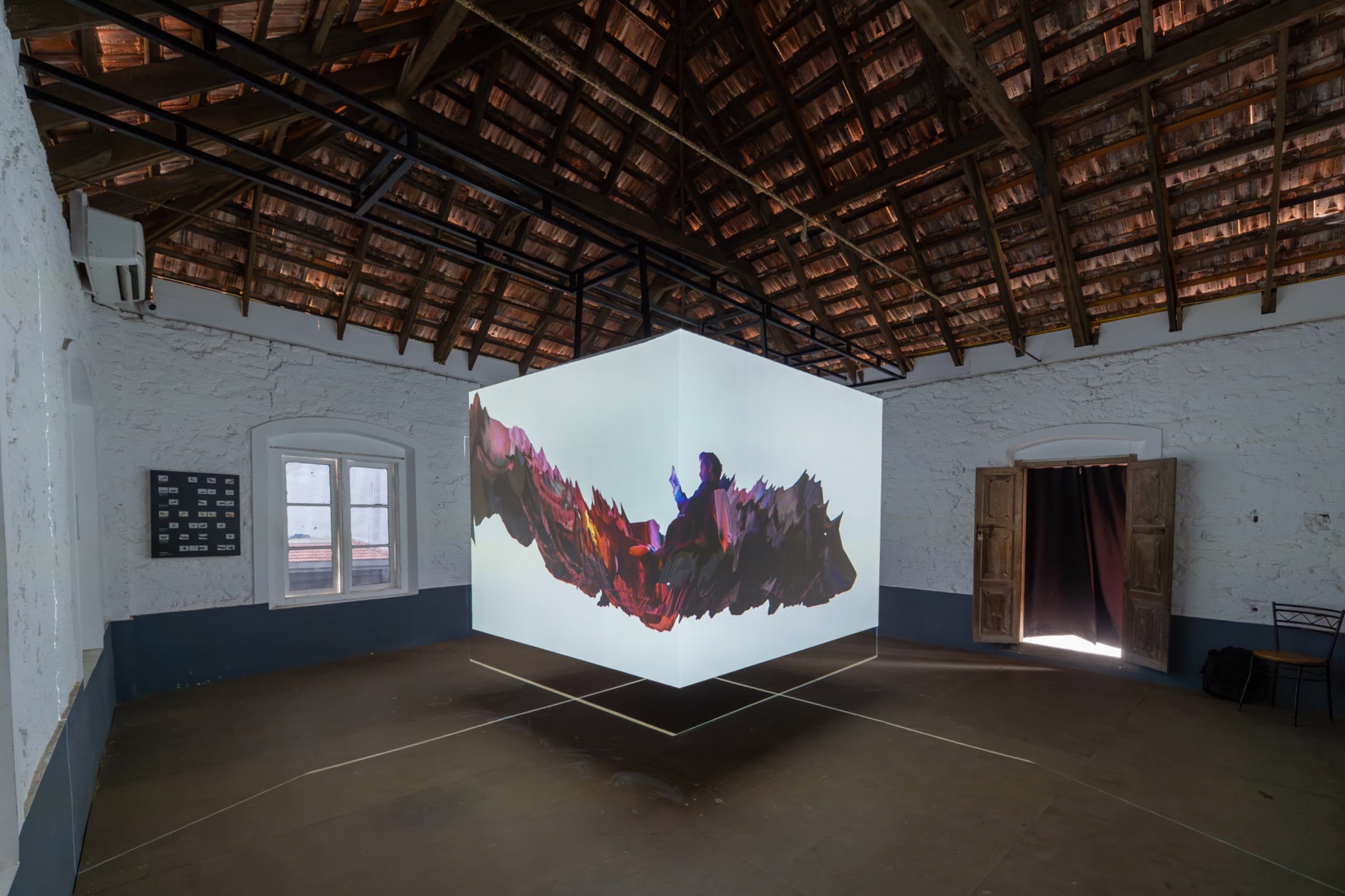
Utsa Hazarika's 'Yantra (32° N / Horizon)' (2025) and 'Bloom (10°N / 28°N)' at Pepper House, Fort Kochi. Photo courtesy of Kochi Biennale Foundation.
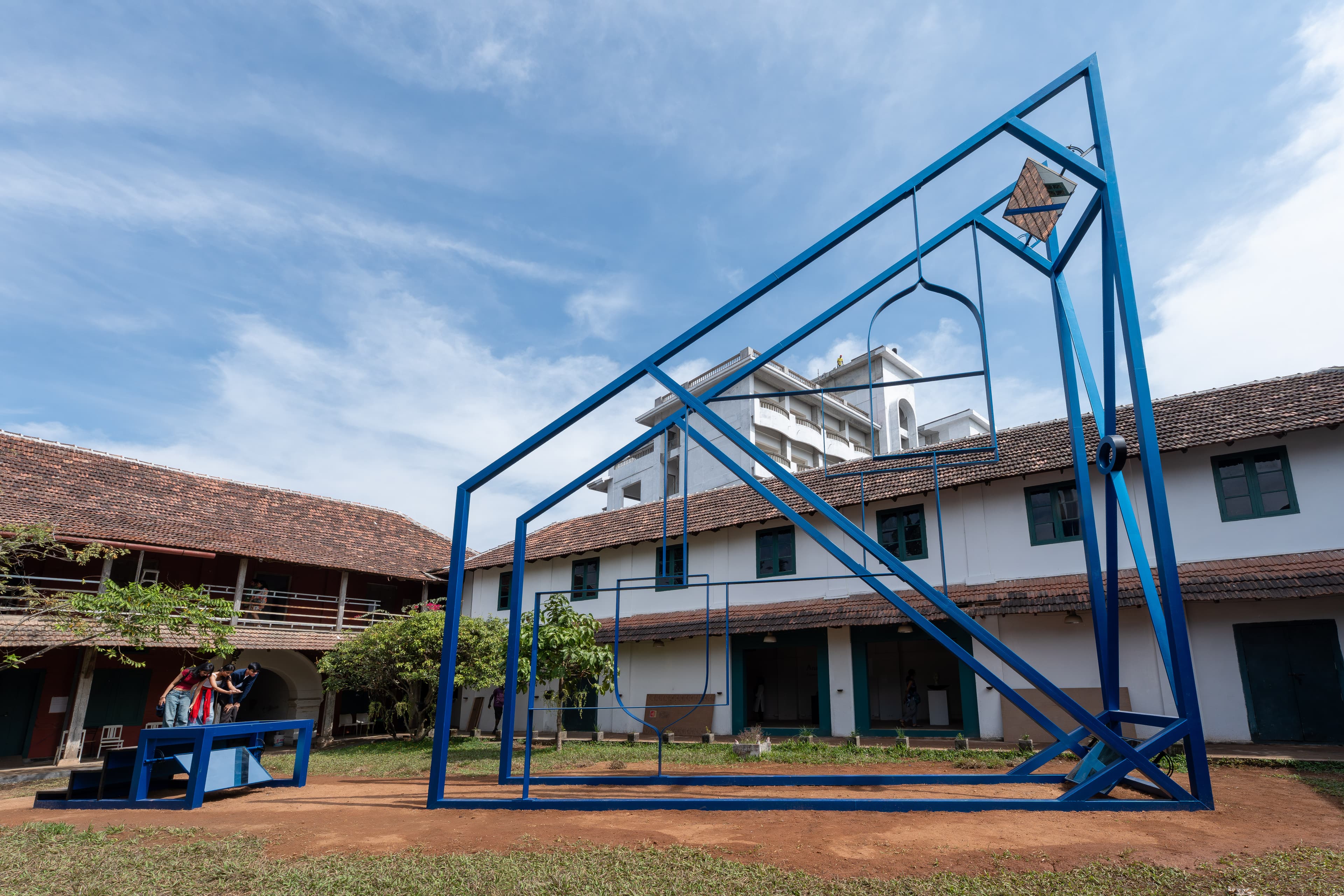
Bani Abidi and Anupama Kundoo’s 'Barakah' (2025). Photo courtesy of Kochi Biennale Foundation.
Related Insights
Meet Tomorrow, Young Climate Prize Cohort 03
“If I want to save a lake, it’s not something I can do alone”
“The Young Climate Prize taught me you can always be an exception”
“When working in a favela, there are many demands that we need to address”

DEAR MAYOR MAMDANI: “ARCHITECTURE IS ONE OF THE MOST POLITICAL FIELDS”
DEAR MAYOR MAMDANI: “DO NOT LEAVE HOUSING IN THE HANDS OF DEVELOPERS”
.jpg&w=3840&q=75)
“If you want to change something, you really have to listen”

DEAR MAYOR MAMDANI: “NEW YORK IS BUILT AS A LABORATORY FOR ARCHITECTURE”
DEAR MAYOR MAMDANI: “THE CITY IS OUR LIVING ROOM”
Related Videos
Session 2: Keeping Time | Town Hall
Surroundings of the Notre-Dame
From the Earth to the Sky
Grand Egyptian Museum
Thoravej 29
Chaki Wasi Handicrafts Center
Bët-bi
Dia Beacon
Core Memory